You’ve got knowledge people want. Now comes the big question: should you package it as a course, or build a membership site?
It’s tempting to start comparing software straight away. But the best choice isn’t really about which platform has the shiniest features. It’s about the experience you’re promising your customers, and what you can deliver consistently.
Let’s make the difference clear, so you can choose with confidence (and avoid building a tech castle you don’t need!).
First, what are you actually selling?
A course platform is designed to guide someone through a defined learning journey. There’s usually a clear starting point, a sequence of lessons, and a result they’re working towards.
Think: “Learn to price your services” or “Build your first online course.”
A membership site offers ongoing value over time. Members might get regular training, fresh resources, live sessions, community access, or continuing support.
Think: “Get monthly business coaching and new tools to help you grow.”
One isn’t automatically better than the other. They solve different customer needs. And you can build both into your business, but it helps to know which one should come first.
Choose a course platform for a clear transformation
A course platform may be the better fit when your customer wants to learn something specific and can get meaningful value from a structured programme.
You might choose this route if:
- Your expertise can be organised into clear steps or modules.
- Your customer is aiming for a particular outcome.
- The core material won’t need major changes every week.
- You’d rather focus on creating and improving a product than running a regular community.
A course also lets you put the learning journey in order. You can set up lessons, downloads, exercises, and progress checks, then explain exactly what a student gets when they buy.

The important question isn’t “Can I record enough videos?” It’s “Can I help someone reach a worthwhile result with this material?”
That result gives your course a stronger promise, and makes it easier for the right people to understand why it’s valuable.
Choose a membership site for a reason to return
A membership site makes more sense when your customers need continued help, connection, or new material. The value isn’t just in a library they can browse once. It’s in having a reason to come back.
That could mean:
- New training or resources released regularly.
- Live sessions, coaching, or ongoing accountability.
- A community where members can ask questions and learn together.
- Support for a topic that changes over time.
Here’s the bit people sometimes skip: recurring payments come with a recurring promise.
Before choosing membership site setup, ask yourself what a member will look forward to next month. Can you deliver it reliably, without turning your calendar into a never-ending content treadmill?
A membership doesn’t need a huge new content drop every week. But members should be able to see and feel the ongoing value: through useful support, a helpful community, fresh resources, or a clear rhythm of activity.
The quick decision test
Try this simple question:
If someone gets everything they need from your core offer, would they still have a good reason to stay connected and keep paying?
- If the answer is “not really,” start with a course.
- If the answer is “yes, because there’s ongoing support, community, or new value,” explore a membership.
- If it depends on the person, a hybrid might be worth considering.
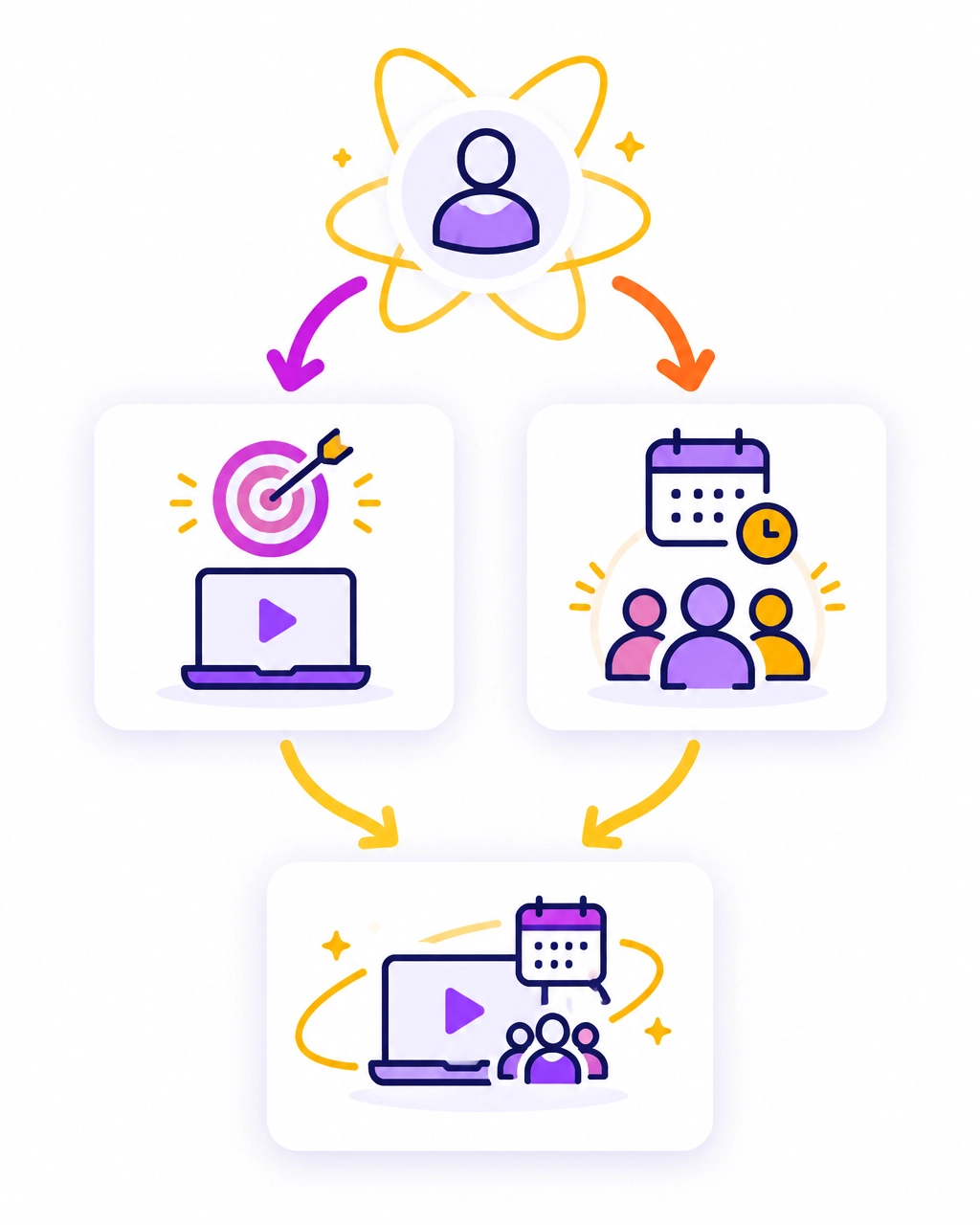
A hybrid could mean selling a focused course on its own, then offering optional membership access for continued coaching, implementation, or community. Or your membership might include a collection of courses as part of the ongoing offer.
But don’t build the deluxe version just because you can. Start with the clearest promise your customers need. You can add the second layer when you know it will genuinely help them.
Look beyond the platform features
Once you know what you’re selling, choosing software gets much easier. Start by mapping the customer journey, not by collecting a long list of features.
For a course platform setup, you may need:
- A clear, easy-to-follow lesson area.
- A way to release lessons all at once or gradually.
- Student payments and reliable access to course content.
- Welcome emails and helpful reminders.
For membership site setup, you may also need:
- Recurring payments and clear cancellation processes.
- Different access levels, if you have multiple membership options.
- A way to share regular updates, events, or community access.
- Member onboarding and reminders that support participation.
Whichever model you choose, sketch the behind-the-scenes journey too. What happens after payment? Does the customer receive the right welcome email and account access? What happens if a payment fails, a subscription ends, or a student gets stuck?
These details aren’t glamorous, but they’re what make your offer feel polished. Good automated workflows for business take repetitive admin off your plate and help customers get what they paid for without waiting for you to manually flick every switch.

Test the idea before you build the whole thing
You don’t have to create a complete course library, or a year’s worth of membership content, before you find out whether people want the offer.
You could start with a small paid workshop, a short pilot programme, or a conversation with people who already buy from you. Listen for what happens next. Do they feel ready to continue on their own? Do they ask for more guidance, regular updates, or a place to get support?
A quick scorecard or quiz can also help you understand what your audience needs before you design the offer. For example, you could ask about their current stage, biggest challenge, and preferred type of support, then use their answers to guide your next step.
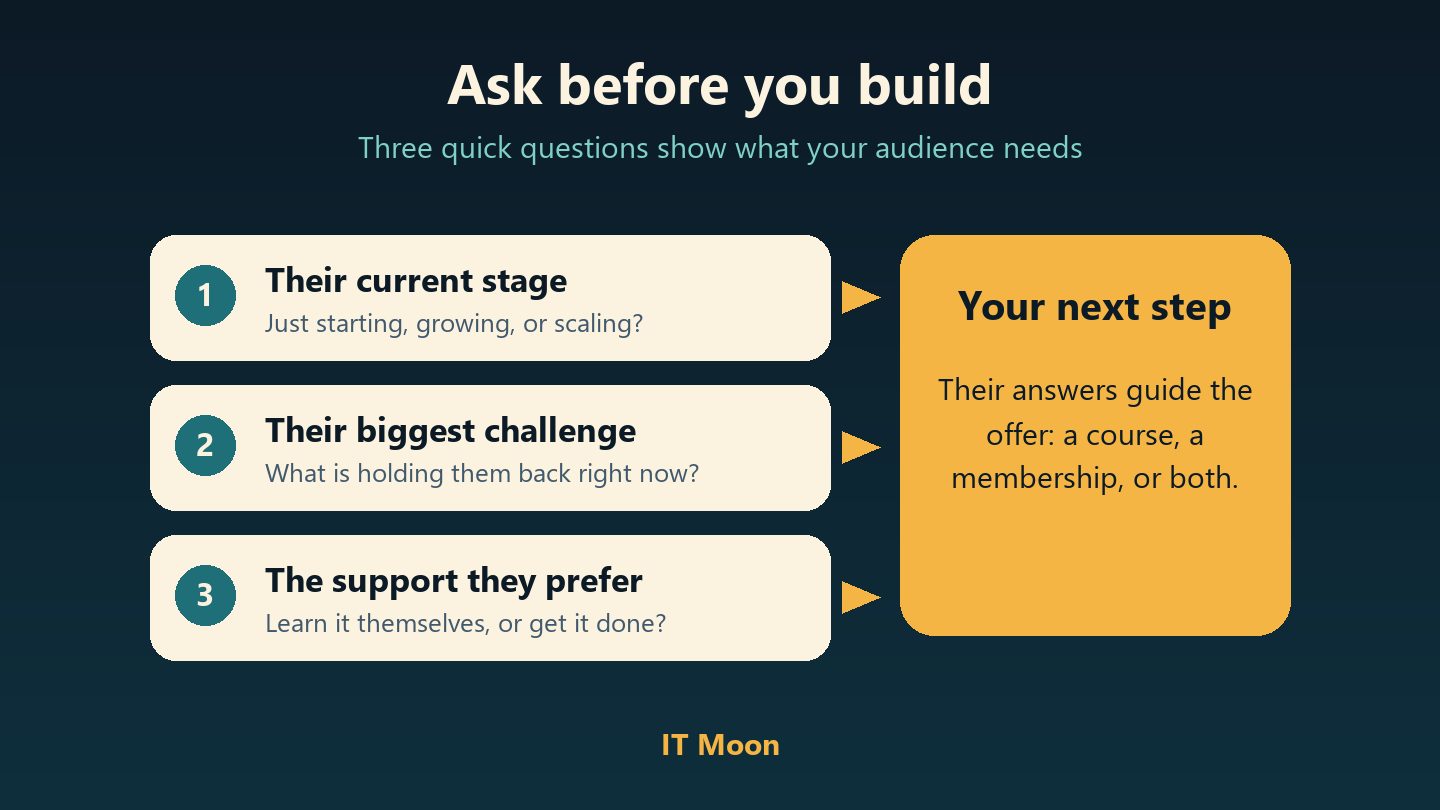
If you’d like to explore that kind of audience insight tool, you can take a look at ScoreApp here. It can help you collect responses and guide people towards a relevant next step: handy when you’re weighing up which offer to build.
So, which is better for your business?
A course is a strong choice when you’re selling a focused transformation. A membership is a strong choice when customers benefit from ongoing value.
The best setup is the one that fits the promise you can keep, not simply the one that makes recurring revenue sound exciting.
A few useful questions to ask yourself:
- What result is my customer hoping to get?
- Is that result best delivered through a clear course, or continued support?
- What can I realistically maintain alongside the rest of my business?
- What needs to happen automatically after someone joins?
Answer those honestly and your platform decision becomes much less mysterious. You’ll be choosing a home for a clear offer, rather than trying to make software decide your business model for you.
And if you decide both models have a place? Lovely. Map the simplest version first, then build the next layer when your customers, and your capacity, are ready.
Let’s make the tech feel simpler
Course platform setup and membership site setup both involve more than uploading lessons. You’ve got the customer journey, payments, emails, access, and those little behind-the-scenes details that can quietly eat up your afternoon.
That’s where we can help. At IT Moon, we bring tech, marketing, and practical business support together, so you don’t have to wrestle with every moving part on your own.
Explore our services to see how we can help with your platform, systems, and launches, or get in touch with our team and tell us what you’re planning.
Your idea deserves a setup that works as hard as you do. Let’s make a little tech magic!